The first thing you see when the rig arrives on a sodden Invercargill lot is the auger biting into silt and peat, pulling up a core that tells you more about the site than any set of plans ever could. Our team works with these cores daily, from the eastern suburbs near the New River Estuary to the sandy ridges further north. Designing a shallow foundation here is not just a bearing capacity exercise; it is a dialogue with the ground. The top few metres often hold organics and soft compressible layers that demand a careful balance between footing width, embedment depth, and reinforcement detailing. Before the concrete goes in, we usually run a CPT test to map the soft zones continuously, and when access is tight for a truck-mounted rig we rely on hand-excavated test pits to confirm the stratigraphy at footing level.
In Southland's soft ground, a well-designed shallow footing is a settlement-control device, not just a bearing element.
Methodology applied in Invercargill
Procedure video
Local geotechnical conditions in Invercargill
NZS 3604:2011 provides a prescriptive path for residential footings on 'good ground', but in Invercargill the definition of good ground itself becomes the battleground. More than half the sites we investigate contain peat lenses, soft silts, or loose sands that disqualify them from the simplified approach, and that is where NZS 3404 and the NZGS modules on liquefaction and settlement become the governing documents. The real risk is differential settlement across a footprint—one corner of the house sitting on a dense gravel ridge while the opposite edge bears on compressible organic silt. We have seen total settlements under 15 mm when the design includes a properly keyed raft, and over 40 mm when a narrow strip footing was placed on shallow fill without a geotechnical review. Invercargill's seismic hazard is lower than Wellington's, but the soft soil column amplifies long-period motion, so the bearing stratum must be checked for cyclic degradation even under a serviceability-level event.
Our services
Our Invercargill shallow foundation work spans residential, light commercial, and rural structures across Southland. Each package is tailored to the site geology and the contractor's sequencing constraints.
Geotechnical foundation report
Site-specific bearing capacity, settlement analysis, and footing recommendations signed by a CPEng geotechnical engineer. Includes subgrade improvement specs and construction monitoring triggers.
Reactive soil assessment
Shrink-swell testing on cohesive soils to determine site classification per NZS 3604. Critical for the clay-rich tills found on the northern terraces of Invercargill.
Construction phase verification
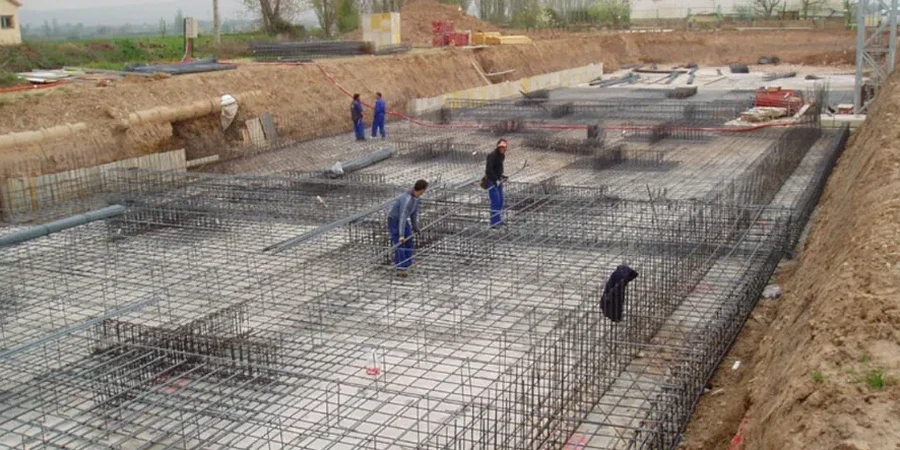
On-site inspections during excavation and concrete placement. We check bearing stratum consistency, gravel pad compaction, and reinforcement layout against the design report.
Quick answers
How much does a shallow foundation design package cost in Invercargill?
For a typical single-storey residential lot in Invercargill, a full geotechnical investigation with CPT or boreholes and a shallow foundation design report runs between NZ$2,930 and NZ$5,490. The range depends on site access, number of test points, and whether we need to run settlement analysis for peat layers.
Do I need a geotechnical report for a residential footing in Invercargill?
NZS 3604 allows prescriptive footing design only if the ground qualifies as 'good ground'. In Invercargill, the prevalence of peat, soft silts, and high water tables means many sites fall outside that definition. A site-specific report protects you from consent delays and future differential settlement claims.
What is the typical embedment depth for a strip footing here?
We normally set the underside of a strip footing between 450 mm and 700 mm below finished ground level in Invercargill. The exact depth depends on the thickness of the desiccated crust and the depth to the first competent bearing layer we log during the investigation.
Can you design a raft slab on Invercargill's peat soils?
Yes, and we do it regularly. A stiffened raft with edge beams thickened to 400-500 mm can bridge soft peat pockets provided the design accounts for differential settlement. We back the design with settlement modelling and, where needed, specify a compacted gravel raft platform to spread the load uniformly.