A foundation excavation in Invercargill's Windsor neighborhood recently hit a lens of dark, silty clay at less than two meters depth — material that turned plastic and sticky within hours of exposure to the persistent drizzle that defines Southland's climate. The contractor faced a decision: proceed with the designed bearing stratum or stop and reassess. What followed was a set of Atterberg limits tests that reclassified the material from low-plasticity silt to fat clay, triggering a revised foundation depth and the addition of a granular working platform before the first pour. With Invercargill sitting on the floodplain deposits of the Oreti and Makarewa Rivers, these fine-grained surprises are more rule than exception — and the liquid limit, plastic limit, and plasticity index are often the fastest, most cost-effective way to quantify what you are actually building on. Our laboratory runs the full suite in strict accordance with NZS 4203, turning a handful of disturbed samples into a defensible classification that feeds directly into bearing capacity and settlement calculations under NZS 3404. For deeper stratigraphic control, we often pair the testing program with CPT soundings that map the vertical extent of cohesive layers across the site before sampling, ensuring no soft pocket goes undetected.
In Invercargill's alluvial clays, a plasticity index shift of just 10 points can mean the difference between a standard shallow footing and a deepened, reinforced alternative.
Methodology applied in Invercargill
Local geotechnical conditions in Invercargill
The most frequent mistake Invercargill builders make is assuming that a single Atterberg test from one borehole characterizes the entire site. In the layered alluvium south of the city center, lenses of high-plasticity clay can sit directly beside silty deposits with a plasticity index below 7%, and missing that boundary leads to differential heave and cracking in slab-on-grade construction. Another costly error is running the tests on air-dried samples without correcting for the presence of organic matter — the peaty lenses found near the Oreti River margins can produce falsely low liquid limits if not handled with wet preparation from the start. The NZGS guidelines explicitly warn against this shortcut, yet it persists because it saves half a day in the lab. When the plasticity index is underestimated, the resulting foundation design may lack the reinforcement needed to resist seasonal volume changes in Invercargill's wet winters and occasional dry summers. A third mistake is ignoring the liquidity index: a material with a high plasticity index but a liquidity index near zero is stiff and competent, while a low-PI silt with a liquidity index above one can behave as a viscous fluid under load. These distinctions are precisely what a proper Atterberg limits program, interpreted by an experienced geotechnical team, is designed to capture.
Our services
Our Invercargill Atterberg limits service is structured to deliver the specific data points required by structural and geotechnical designers, with laboratory turnaround calibrated to Southland's tight construction windows.
Full Atterberg Suite (LL, PL, PI)
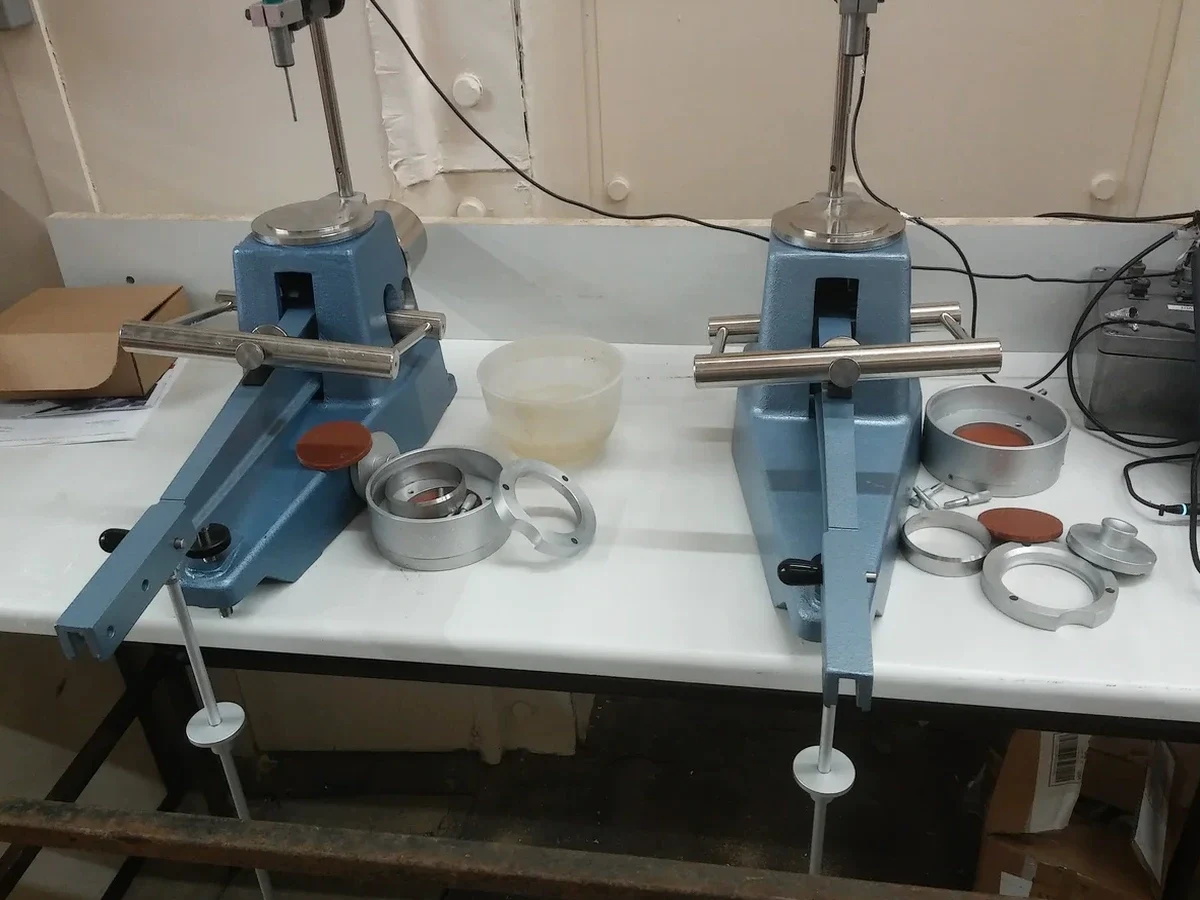
Liquid limit by Casagrande cup, plastic limit by thread-rolling, and calculated plasticity index with NZGS plasticity chart classification — typically completed within 3 working days from sample receipt.
Shrink-Swell Hazard Assessment
Interpretation of PI and clay activity data to quantify potential for seasonal ground movement in Invercargill's moisture-sensitive alluvial clays, feeding directly into footing depth recommendations.
Combined Classification Package
Atterberg limits plus sieve analysis and fines wash for a complete particle-size distribution, enabling dual USCS and NZGS classification of soils with mixed coarse and fine fractions.
Site Variability Studies
Multi-point sampling across a subdivision or commercial site with statistical analysis of liquid limit and plasticity index variation, identifying zones requiring differentiated foundation treatment.
Quick answers
What is the typical cost for Atterberg limits testing on an Invercargill project?
For a standard suite covering liquid limit, plastic limit, and plasticity index on a single sample, the cost ranges from NZ$90 to NZ$180 depending on the number of specimens and whether the material requires special preparation for organic content or high plasticity. Multi-sample programs for subdivision-scale site characterization are priced per sample with volume-based adjustments. Each quote includes the NZGS plasticity chart classification and a brief interpretive note.
How are Atterberg limits used in foundation design under New Zealand standards?
The plasticity index derived from Atterberg testing feeds directly into soil classification under NZS 4203 and the NZGS guidelines, which in turn determines presumptive bearing capacities and the depth requirements for footings in cohesive soils. A high PI material signals potential for shrink-swell movement and may require deepened foundations or ground improvement, while a low PI silt might be suitable for shallow footings provided the liquidity index confirms a stiff in-situ consistency.
How many samples do I need to collect for an Atterberg limits program on my Invercargill site?
For a single residential lot, we recommend a minimum of three disturbed samples taken from different depths within the proposed footing influence zone — typically the upper 2 to 3 metres. On larger commercial or subdivision sites in Invercargill's variable alluvial terrain, sampling on a grid of 20 to 30 metres with depth-specific intervals is standard practice, and we can advise on a sampling plan based on the preliminary borehole logs or CPT profiles.
What is the difference between the liquid limit and the plasticity index, and why does both matter?
The liquid limit is the water content at which the soil transitions from plastic to liquid behavior — essentially the upper bound of its workable moisture range. The plasticity index, calculated as liquid limit minus plastic limit, gives the width of that range. A soil with a high liquid limit but a low plasticity index can lose strength abruptly with small moisture changes, while a soil with a moderate liquid limit but a high plasticity index will undergo large volume changes across wet-dry cycles. Both parameters are essential for predicting how Invercargill's cohesive soils will perform under a foundation through Southland's seasonally wet conditions.