Invercargill’s climate throws a lot at a road. With over 1,100 millimeters of rain annually and an average high barely reaching 14°C, moisture and thermal shifts are the two biggest enemies of asphalt. A pavement that works well in Canterbury will rut and crack here within a few seasons. Our team designs flexible pavement structures specifically for the deep, often peaty subgrades found across the Southland plain. We start every project with a forensic look at the subgrade CBR, because ignoring those soft layers means differential settlement shows up fast. When the ground is too weak, we model reinforcement options—often pairing a granular overlay with a stone columns treatment to bridge the peat pockets before the pavement layers go down. It’s a sequencing approach that saves months of post-construction repairs.
A pavement section that drains in 20 minutes will outlast one that drains in 2 hours—especially in Invercargill, where the subgrade never really dries out.
Methodology applied in Invercargill
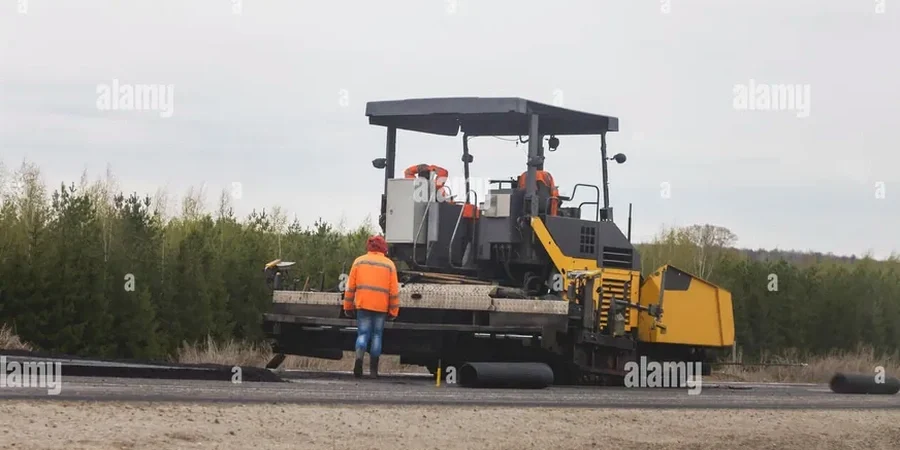
Local geotechnical conditions in Invercargill
NZS 3404 and the NZTA pavement design supplement define the minimum structural number for flexible pavements, but Invercargill’s high groundwater table introduces a risk that standard charts don’t fully capture: moisture-induced modulus decay. When a granular basecourse sits within 300 millimeters of the water table, its effective modulus can drop by 40% within two years. That translates directly into premature fatigue cracking in the asphalt layer. We’ve seen this pattern repeatedly on residential collector roads built before the 2010s. The fix involves raising the formation level with a free-draining subbase and specifying a thicker bituminous surfacing to spread the stress cone. For subdivision access roads crossing old swamp deposits, the structural design must also account for long-term creep settlement in the organic layers below. A pavement that looks perfect on day one can develop 30-millimeter ruts by year five if the subgrade wasn’t uniformly stabilized. Our lab testing program catches these weak zones before the asphalt plant is even booked.
Our services
Our Invercargill pavement group handles the full chain from geotechnical investigation to structural section sign-off. Every project includes laboratory validation of the materials you already have on site, because importing aggregate from the Mataura quarries adds cost that a smart design can often avoid.
Subgrade Investigation & CBR Testing
Dynamic cone penetrometer profiles and soaked laboratory CBR tests at the formation level, mapped across the full road alignment to identify transition zones between firm gravels and soft peats.
Pavement Structural Design
Layered elastic analysis using CIRCLY or equivalent software, producing a build-up specification with asphalt, basecourse, and subbase thicknesses optimized for your traffic loading class.
Quality Assurance During Construction
Nuclear densometer testing, sand cone density checks, and asphalt core sampling to verify that the placed layers meet the design compaction and thickness requirements.
Quick answers
What’s the typical cost range for a flexible pavement design package in Invercargill?
A full design package—including subgrade investigation, lab testing, and the structural report—typically falls between NZ$2,870 and NZ$9,580. The spread depends on the length of the road, the number of boreholes or test pits required, and whether we’re dealing with uniform soils or highly variable peat zones.
How do you account for Invercargill’s peat soils in the pavement design?
We map the extent and depth of the peat through test pits or CPT soundings, then model the long-term consolidation settlement under the pavement surcharge. If the predicted settlement exceeds the serviceability limit, we design a ground improvement layer—typically a compacted rock raft or stone columns—to bridge the weak material before the pavement layers are placed.
Which asphalt mix works best in Southland’s wet, cool climate?
We typically specify a dense-graded asphaltic concrete with a polymer-modified binder for high-stress locations. The polymer modification improves flexibility at low temperatures, reducing the risk of thermal cracking during Invercargill’s frequent frost events, while the dense gradation limits water ingress into the basecourse.
How long does the pavement design process take from field work to final report?
For a typical subdivision road in Invercargill, you can expect field investigation within one week, laboratory testing within two to three weeks, and the final design report delivered within four weeks of site access. Larger projects with complex ground conditions may extend the schedule slightly.