Southland's high water table and deep peat deposits demand a different approach to site investigation. In Invercargill, we see basements flooding and slabs cracking because standard borehole data missed thin, compressible layers. The Cone Penetration Test (CPT) cuts through that ambiguity. With a continuous profile of tip resistance and sleeve friction, we map the exact depth of the Oreti River's soft alluvium. The city's average annual rainfall exceeds 1,100 mm, keeping the ground saturated year-round. This makes pore pressure dissipation tests critical for any foundation design here. For sites near the New River Estuary, we often combine CPT data with a liquefaction assessment to satisfy NZS 3404 requirements before structural design begins.
A single CPT sounding replaces multiple SPT boreholes when you need a continuous soil behaviour profile in soft, saturated ground.
Methodology applied in Invercargill
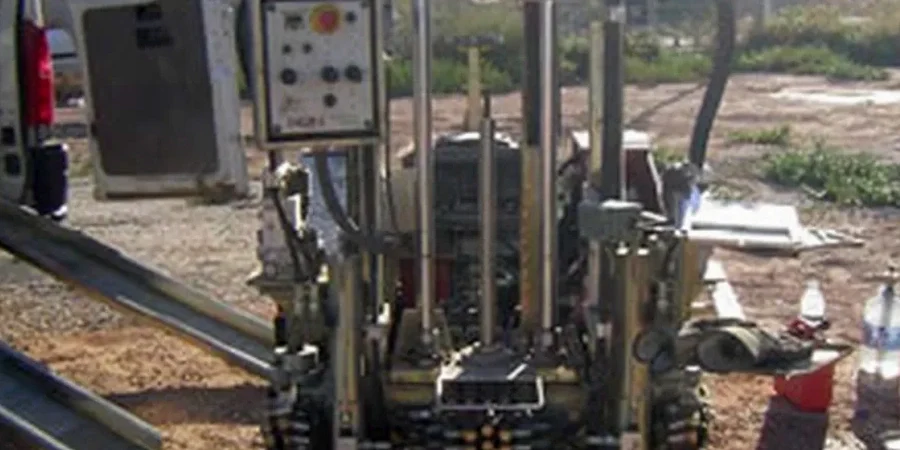
Local geotechnical conditions in Invercargill
The ground between Turnbull Thomson Park and the estuary is not the same as the ground out by the airport. Near the park, we consistently find loose Holocene sands overlying soft marine clays. That sequence is a classic liquefaction hazard under a moderate Alpine Fault rupture. Out east, the risk shifts to differential settlement where peat lenses pinch out abruptly. The biggest mistake we see is applying a single bearing pressure assumption across the whole site. A CPT profile from one corner can look completely different from the opposite side just 20 metres away. Ignoring that variability leads to cracked floor slabs and services pulling apart. The data from a well-executed CPT survey lets the structural team design for the real ground, not an assumption.
Our services
We provide two core CPT service packages tailored to Invercargill's ground conditions and project scale.
Seismic CPTu (SCPTu)
Full piezocone logging plus downhole shear wave velocity measurement every 1.0 m. Essential for site-specific seismic hazard analysis under NZS 1170.5. We use a dual-channel seismograph for clear S-wave arrival picks in soft soils.
Pore Pressure Dissipation Testing
Stopped-push dissipation tests at key horizons to estimate hydraulic conductivity and consolidation characteristics. Critical in Invercargill's saturated peat and clay layers where settlement is the primary design concern.
Quick answers
How much does a CPT test cost in Invercargill?
For standard residential or light commercial projects in Invercargill, budget between NZ$310 and NZ$360 per sounding. Mobilisation is charged separately and depends on the number of pushes and distance from our base. A typical house site with three CPTs usually comes in under NZ$1,500 including the factual report.
Can a CPT replace a borehole for my foundation design?
In soft soils, yes, and very often. The CPT gives a continuous vertical profile that catches thin layers an SPT misses. However, you still need at least one borehole or test pit if you need undisturbed samples for lab testing. We typically recommend a hybrid approach: a few CPTs for profile continuity and one machine-dug test pit for visual logging and sampling.
What depth can you reach in Invercargill's soils?
Our standard rig pushes to 20 MPa capacity, which typically gets us to 15–20 metres in the soft alluvium and peat around the city. In the dense Mataura gravels found at depth towards the airport, we may hit refusal earlier. For deeper targets, we deploy a 50 MPa heavy-duty rig.
Do I need a CPTu or just a standard CPT?
For any site in Invercargill with a water table within 2 metres of the surface, which is almost everywhere, we strongly recommend the piezocone (CPTu). The pore pressure data is what separates a real settlement estimate from a guess. Without u2 readings, you cannot reliably correct tip resistance for pore pressure effects in saturated fine-grained soils.
How quickly can we get the CPT results?
The factual data log is available the same day as the field work. Our interpreted report, including soil behaviour type classification, undrained shear strength profiles, and liquefaction triggering analysis, is typically delivered within 3 working days. We can expedite to 24 hours if the rig is already on site and the data set is clear.